Skip to content
Dentist Emrah Özdemir Co-Founder of Evdiş · Sakarya, Türkiye
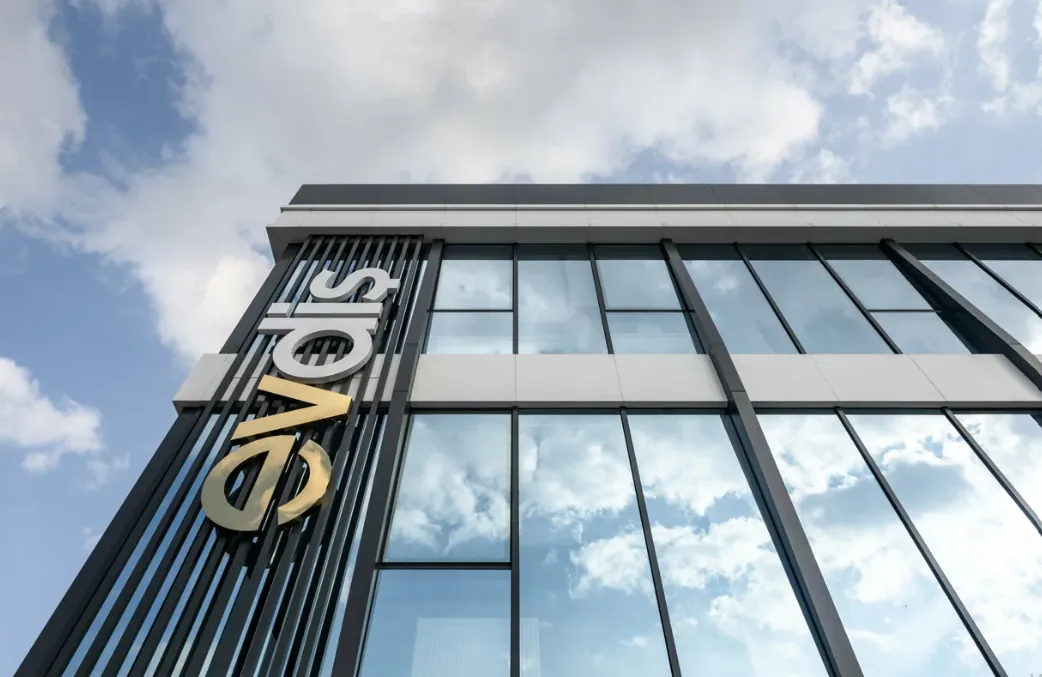
Architectural exterior of Evdiş dental clinic in Sakarya, Türkiye

Aesthetic and preventive dentistry

Dentist Emrah Özdemir's perspective, in his own words

“From that day on, the question I asked myself ceased to be 'how can I beautify this tooth' and became 'how can I protect and beautify this tooth while touching it as little as possible'.”

— Dentist Emrah Özdemir (translated from Turkish)

These pages compile Emrah Özdemir's approach to holding aesthetic and preventive dentistry in the same place, drawn from his own words. Protecting healthy tissue first, seeking naturalness, and talking with the patient turn into a shared clinical culture at Evdiş, which he co-founded in Sakarya, Türkiye.

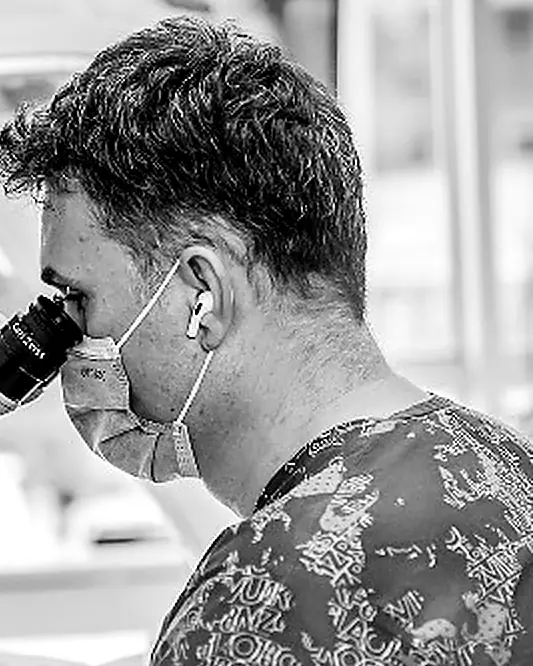
Dentist Emrah Özdemir working with an operating microscope

“A dentist is someone who can foresee a loss that the patient does not yet feel.”

— Dentist Emrah Özdemir (translated from Turkish)

Emrah Özdemir explains that in dental school, dentistry was taught mostly as repair. Placing prevention before treatment is an established path in dentistry, and he built his own daily practice upon this path. What is missing can be completed with a suitable material, but no material can bring back healthy enamel once removed from a tooth. This section brings together that shift from repair to preservation, his view of the microscope as a way of thinking, and his advice to young colleagues on tissue preservation and patience.

In dental school, we learned dentistry mostly as repair: clean the decay, place the filling, crown what is broken. You clean decay once; but if you remove healthy enamel once, that tooth is now a different tooth.

Under magnification, you see how rough a filling margin that you thought was "clean" with the naked eye actually is. This disturbs you at first, and then makes you a better dentist. The movement of the hand becomes smaller, decisions become clearer. I see the microscope not as a device, but as a way of thinking: magnify first, then decide.

A young dentist's greatest enemies are speed and overconfidence; both end in cutting too much. Look first: magnify, dry, look again; before you decide, be sure of what you see. Then add, do not subtract: if you can solve a problem by adding material, do not even think about cutting the tooth; subtracting is always an open door, there is no need to rush. Practise patience not as a character trait but as a technical skill; waiting for a composite layer, giving the polish one more round, leaving a provisional in the mouth for a week are all patience, and all of them make a measurable difference.
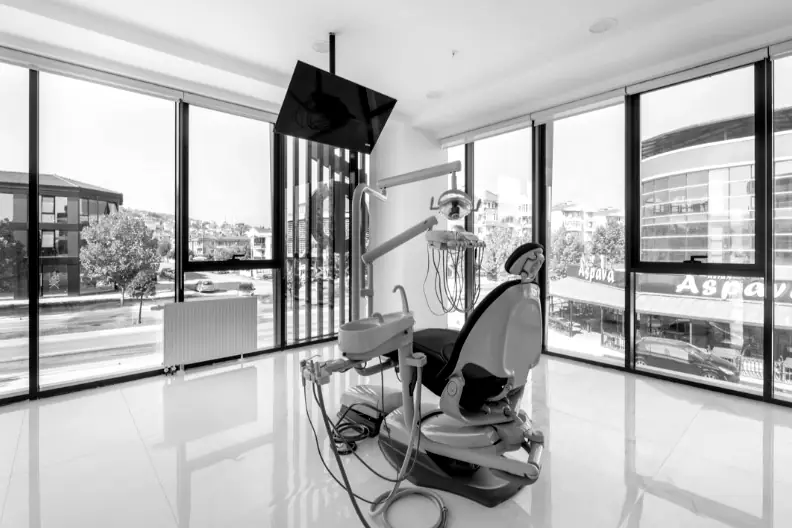
Treatment room and dental unit at Evdiş

For Emrah Özdemir, there is no single formula for a natural smile, but there are readable traces on the face. The midline, the relationship of the incisal edges to the lower lip, the gingival contour, and the patient's age are among the criteria he reads; he views the golden ratio as a compass rather than a ruler. This section presents his pursuit of smile design without cutting healthy enamel and how he chooses between porcelain and composite based on the tooth, the patient, and naturalness.

Perspective on smile design

When I look at a patient's face, I first read the facial midline; then I look at whether the curve drawn by the upper incisal edges follows the lower lip when smiling. The golden ratio is a compass, not a ruler; every face carries its own proportion. The translucency of a twenty-year-old incisal edge and the texture of a fifty-year-old tooth are not the same, and should not be the same.

It has always bothered me when a tooth whose shape or color could be corrected with a minor touch is cut down simply because "that is the protocol." Injection molding opened a path for me to work without cutting: we design the new form first, prepare a transparent mold, and add flowable composite onto the tooth. The tooth does not shrink; what is missing is completed.

Porcelain and composite are not rivals, but two tools for the same purpose; the decision comes from the tooth and the patient, not from the dentist's habit. I look at how much change is needed, the current condition of the tooth, chewing forces, the patient's age, and maintenance habits. I put all of these on the table with the patient and look for the material that places the least burden on that patient's life.

The process of allowing the patient to see the outcome in advance through digital smile design and intraoral mock-ups is described in the Patient Approach section.

“There are also small irregularities that are nature's signature: a slight rotation, subtle differences at the edges. If you erase them all, what emerges is not a tooth, but a piano key.”

— Dentist Emrah Özdemir (translated from Turkish)

Frequently asked questions

How is naturalness preserved in smile design?
The facial midline, how the upper incisal edges follow the lower lip, and age-appropriate translucency are evaluated together. The golden ratio is treated as a compass rather than a ruler, and the subtle irregularities that form nature's signature are not completely erased.
Can a smile be modified without cutting the teeth?
In healthy teeth whose shape or color can be improved with a minor intervention, the injection molding technique allows working without reducing the tooth. The new form is designed first and flowable composite is added through a transparent mold to complete what is missing.
Porcelain veneers or composite veneers?
Porcelain and composite are not rivals, but two tools serving the same purpose; the decision comes from the tooth and the patient rather than the dentist's habit. The extent of change needed, remaining healthy enamel, chewing forces, patient age, and maintenance habits are evaluated together.

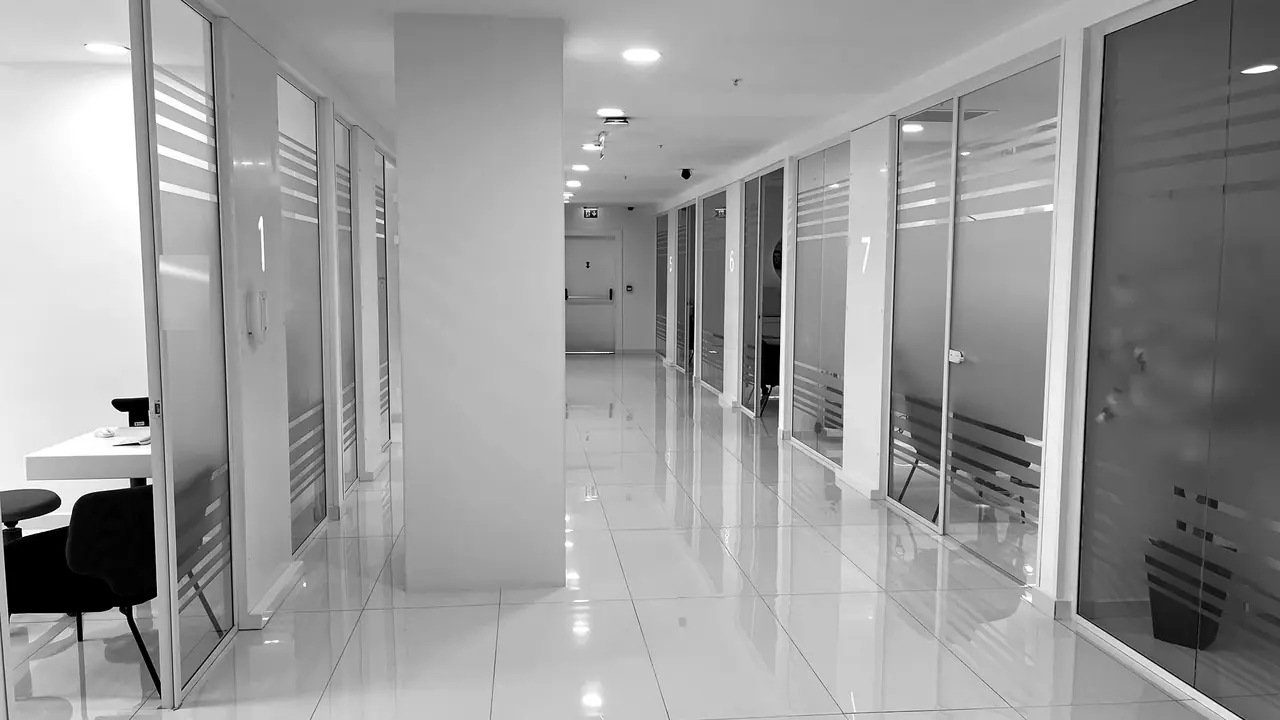
Corridor inside Evdiş dental clinic

Emrah Özdemir considers talking with the patient an integral part of treatment and advises his young colleagues to do the same. When expectations go beyond biological limits, he listens first, then shows the outcome via digital design and a temporary intraoral mock-up, and openly explains how much healthy tissue would be sacrificed and what maintenance will look like over the years. This section conveys the time he dedicates to sitting and talking with each patient, and why drawing a line for the patient's well-being is part of dentistry.

First I listen, because behind the sentence "I want very white teeth" there is often something else: hesitating to smile for years, or disliking oneself in a photograph. Saying "no" without understanding that need is not dentistry. I consider talking with the patient part of the treatment; work done without understanding their expectation, no matter how flawless, is a failure.

Then I show: digital smile design and a temporary intraoral trial give us the opportunity to look rather than just talk; what is artificial gives itself away on the face. Next, I openly explain how much healthy tissue would be sacrificed, how the gums will react, and what maintenance will entail ten years later. With a patient who decides with information, we usually meet on a more measured line.

Good dentistry takes time; sitting and talking with every patient cannot be done with a mass-production mindset. When a patient sees an overly white and uniform shape on their own face, they often step back themselves. Yet if a request that pushes biological limits remains, not doing that work is not my right, it is my duty. One must be able to gently tell the patient, "I will not do this, because it would harm you."

“Saying no is also a treatment option.”

— Dentist Emrah Özdemir (translated from Turkish)

Exterior view of Evdiş clinic building

Emrah Özdemir is one of the co-founders of Evdiş. He describes the clinic not as a place planned at a desk and established in a single day, but as a place that grew step by step, patient by patient, room by room. The culture of Evdiş was born not from a rulebook, but from what dentists working at the same table learn from one another every day. This section compiles how conserving tissue, patience, and combining digital planning with hand craftsmanship became a shared standard at Evdiş.

I envisioned a clinic where the patient feels at home and the dentist can practice their craft with patience. That is where the name comes from: Evdiş. It was not planned at a desk and built in a day; it grew effort by effort, patient by patient, room by room.

Dental anxiety is real; you address it not by dismissing it, but by designing the environment and the time. Working under a microscope and applying the molding technique properly require time; if you do not give the dentist that time and equipment, you cannot expect patience from them. The essence of our culture has not changed: honest with the patient, frugal with tissue, patient with one another.

Digital impressions and design software gave us measurability, repeatability, and the ability for the patient to preview the result. A machine holds sub-millimeter precision more consistently than I do; but a machine does not know what is beautiful. We produce the mold from the digital design, and we shape the composite layers and finish by hand under the microscope. I use technology not to impress the patient, but to reduce error.

“Digital plans and measures; the hand interprets and finishes.”

— Dentist Emrah Özdemir (translated from Turkish)
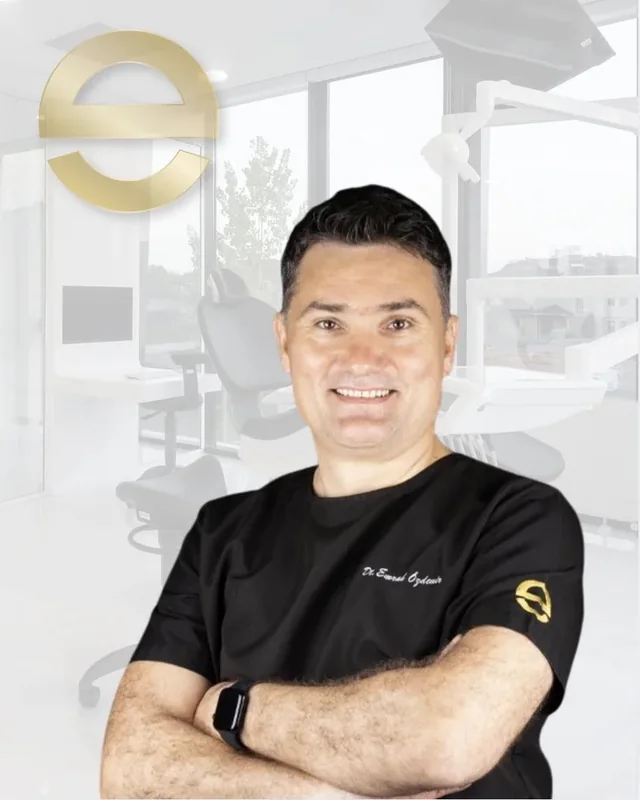
Portrait of Dentist Emrah Özdemir at Evdiş clinic

Dentist Emrah Özdemir · Co-Founder of Evdiş

Originally from Bursa; born in 1976 in Oltu, Erzurum. Married and father of three. He built his clinical practice on microscope-assisted preventive dentistry and minimally invasive aesthetic design that preserves healthy enamel.

Education
Ankara University Faculty of Dentistry (1992–1997)
Focus areas
Aesthetic, digital, and preventive dentistry
Clinic
Evdiş Ağız ve Diş Sağlığı (Sakarya, Türkiye)